How Anti-Glare Film Improves Airport Information Display Visibility
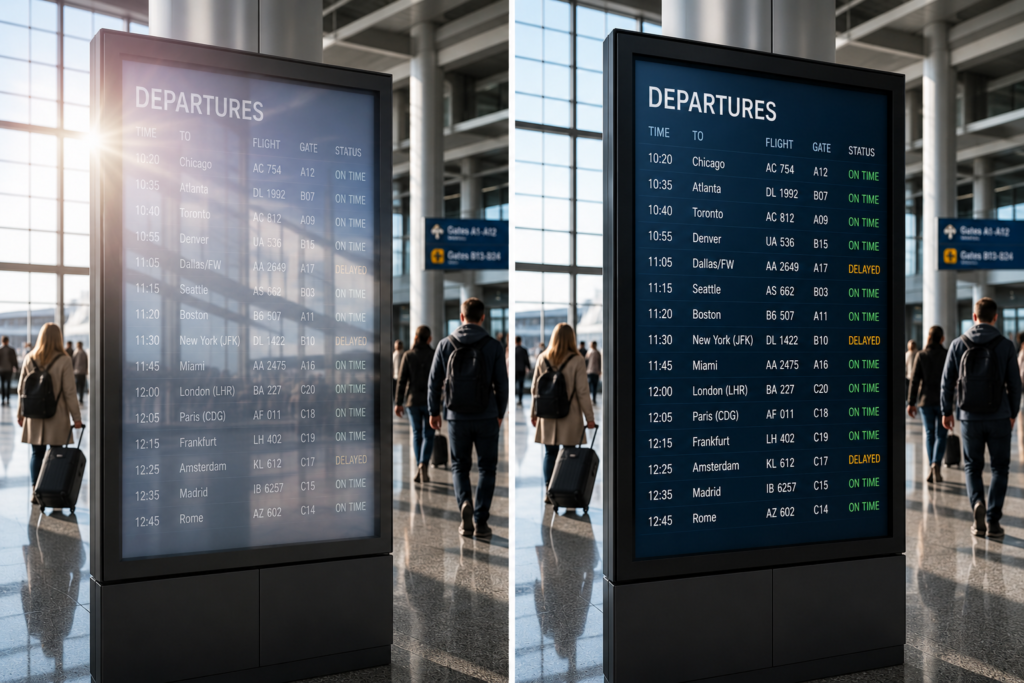
Airport Information Displays Must Remain Visible Around the Clock
Airports depend on digital displays to keep passengers informed.
Every day, travelers rely on flight information displays, departure boards, gate announcements, baggage claim screens, wayfinding kiosks, and interactive directories. As a result, display visibility plays a critical role in the passenger experience.
However, airport environments create unique visibility challenges.
Because airports feature large glass walls, skylights, expansive terminals, polished flooring, and bright architectural lighting, glare can quickly reduce screen readability. Consequently, passengers may struggle to locate gates, verify flight information, or navigate unfamiliar terminals.
Fortunately, anti-glare film provides a practical solution that improves visibility while helping airports deliver a smoother travel experience.
Why Airport Display Visibility Matters
Airport displays communicate essential information.
Passengers frequently depend on screens to view:
- Flight departures
- Flight arrivals
- Gate assignments
- Boarding times
- Terminal maps
- Baggage claim information
- Security updates
- Emergency notifications
However, when glare obscures important information, confusion can quickly develop.
Furthermore, missed information can increase stress, especially for travelers facing tight connections or unfamiliar airport layouts.
Therefore, maintaining clear screen visibility is essential for efficient airport operations.
Modern Airport Architecture Creates Reflections
Today’s airports are designed to maximize natural light.
For example, many terminals include:
- Floor-to-ceiling glass walls
- Large skylights
- Reflective flooring
- Bright overhead lighting
- Open concourse layouts
While these features create attractive spaces, they also generate significant reflections.
Meanwhile, sunlight angles constantly change throughout the day.
Because of this, display visibility can vary dramatically depending on location and time.
As a result, even high-brightness commercial displays may experience readability issues.
What Is Anti-Glare Film?
Anti-glare film is an optical surface treatment designed to reduce reflected light on display surfaces.
Rather than increasing display brightness, the film helps minimize reflections that interfere with visibility.
Consequently, passengers can view information more clearly, even in bright terminal environments.
Benefits include:
- Reduced reflections
- Improved readability
- Better contrast perception
- Enhanced viewing comfort
- Improved passenger experiences
- Faster information access
Additionally, anti-glare film can often be applied directly to existing displays.
Improve Flight Information Display Systems
Flight Information Display Systems (FIDS) represent some of the most important screens in an airport.
Passengers rely on these displays to verify:
- Flight status
- Departure times
- Gate changes
- Boarding information
- Arrival details
However, glare can make critical information difficult to read from a distance.
By reducing reflections, anti-glare film helps improve visibility across a wider range of viewing angles.
As a result, passengers can locate information more quickly and confidently.
Better Visibility Improves Passenger Experience
Airport operators continuously look for ways to improve traveler satisfaction.
Fortunately, display readability plays a significant role in passenger comfort.
When information is easy to locate:
- Stress levels decrease
- Navigation becomes easier
- Travelers feel more confident
- Customer service demands often decrease
- Overall terminal experiences improve
Consequently, visibility improvements can positively affect both passengers and airport operations.
Enhance Interactive Airport Kiosks
Many airports now utilize touchscreen kiosks for:
Self Check-In
Help travelers process tickets efficiently.
Wayfinding Systems
Improve navigation throughout large terminals.
Customer Service Stations
Provide information without requiring staff assistance.
International Travel Assistance
Support multilingual passenger communication.
However, touchscreen usability decreases when reflections interfere with visibility.
Fortunately, anti-glare film helps create a more intuitive and user-friendly experience.
Ideal Airport Applications for Anti-Glare Film
Anti-glare film performs exceptionally well on:
Flight Information Displays
Improve visibility throughout terminals.
Departure and Arrival Boards
Enhance readability from greater distances.
Interactive Wayfinding Kiosks
Support passenger navigation.
Self-Service Check-In Stations
Improve touchscreen usability.
Baggage Claim Displays
Help passengers locate luggage information quickly.
Because these systems depend heavily on readability, glare reduction can provide immediate benefits.
Why Airports Choose SSI Anti-Glare Solutions
At Screen Solutions International, anti-glare films are engineered for demanding commercial environments where display visibility directly impacts user experience.
Benefits include:
- Reduced reflections
- Improved readability
- Better touchscreen performance
- Enhanced passenger satisfaction
- Cost-effective upgrades
- Professional appearance
Whether installed on a few displays or throughout an entire airport terminal, anti-glare film helps maximize display effectiveness.
Learn more:
Final Takeaway
Airport information displays serve as a critical communication tool for travelers.
However, reflections from sunlight, glass, and architectural lighting can reduce visibility and make information harder to access.
Fortunately, anti-glare film improves readability, reduces reflections, and creates a better passenger experience.
As airports continue investing in digital infrastructure, glare reduction remains one of the most effective ways to improve information display performance and traveler satisfaction.
Sources
https://www.antiglarefilms.com