How Anti-Glare Film Improves Outdoor Wayfinding Kiosk Visibility
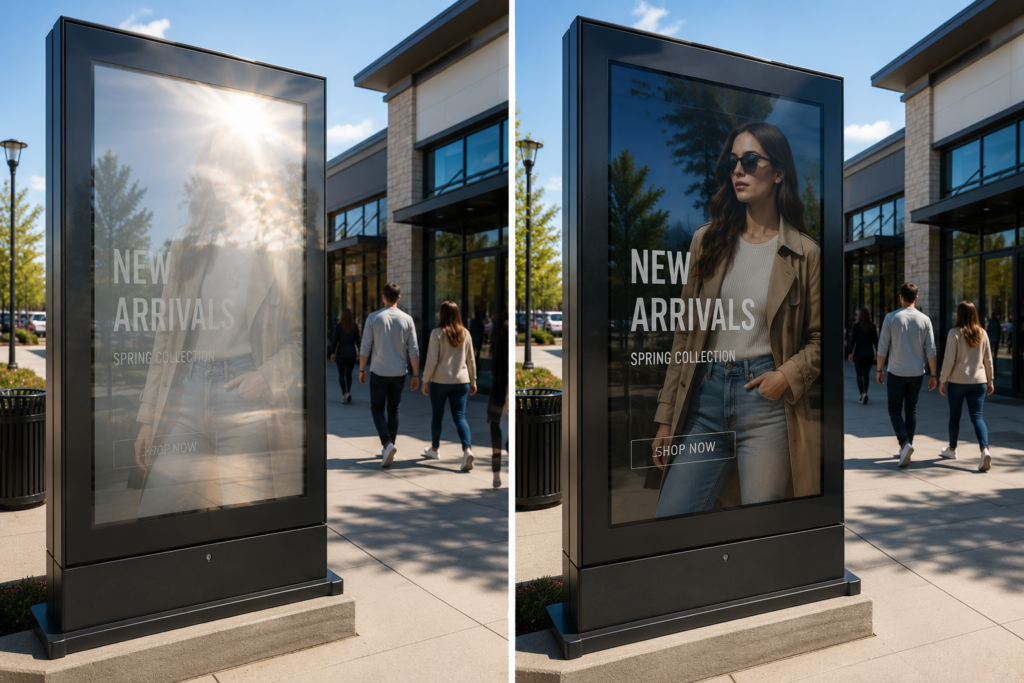
Outdoor Wayfinding Kiosks Are Only Effective When People Can Read Them
Outdoor wayfinding kiosks help visitors navigate unfamiliar environments.
Today, these systems are commonly used in airports, universities, hospitals, city centers, parks, shopping districts, entertainment venues, corporate campuses, and transportation hubs. As a result, wayfinding kiosks have become an essential tool for improving visitor experiences.
However, even the most advanced kiosk becomes ineffective when glare makes the screen difficult to read.
Because outdoor kiosks operate in constantly changing lighting conditions, reflections can quickly reduce visibility. Consequently, visitors may struggle to locate destinations, understand directions, or access important information.
Fortunately, anti-glare film helps solve these challenges while improving overall usability.
Why Visibility Is Critical for Wayfinding Systems
Unlike advertising displays, wayfinding kiosks serve a functional purpose.
Visitors depend on these systems to locate:
- Buildings
- Parking areas
- Restrooms
- Event venues
- Retail stores
- Transportation services
- Medical departments
- Campus facilities
However, if screen content becomes difficult to read, visitors may become confused or frustrated.
Furthermore, poor visibility often leads to increased requests for staff assistance.
Therefore, maintaining clear screen readability is essential for successful wayfinding programs.
Outdoor Environments Create Constant Glare Challenges
Wayfinding kiosks are frequently installed in open public spaces.
For example, many systems are positioned near:
- Sidewalks
- Parking lots
- Building entrances
- Transit stations
- Public plazas
- Outdoor shopping centers
As sunlight moves throughout the day, reflections continuously change.
Meanwhile, surrounding glass buildings, vehicles, pavement, and architectural features often generate additional glare.
Because of this, visibility conditions can vary significantly from morning to evening.
Consequently, even high-quality displays may experience readability issues.
What Is Anti-Glare Film?
Anti-glare film is a specialized optical film designed to reduce reflected light on display surfaces.
Rather than increasing display brightness, the film helps minimize reflections that interfere with visibility.
As a result, users can view maps, directories, and information more easily.
Benefits include:
- Reduced reflections
- Improved readability
- Better contrast perception
- Enhanced touchscreen usability
- Improved visitor experiences
- Faster information access
Additionally, anti-glare film can often be installed on existing kiosks without replacing the display.
Improve Map and Directory Visibility
Wayfinding kiosks often contain detailed maps and directional information.
Unfortunately, glare can obscure important details, especially when users are standing at certain viewing angles.
For example, visitors may struggle to identify:
- Building locations
- Walking routes
- Parking areas
- Event spaces
- Department listings
However, when reflections are reduced, users can process information more quickly.
Consequently, navigation becomes simpler and more efficient.
Better Visibility Creates Better Visitor Experiences
First impressions matter.
When visitors arrive at a hospital, university, shopping center, or corporate campus, wayfinding systems are often one of the first tools they encounter.
Therefore, usability directly influences the overall visitor experience.
By improving readability, anti-glare film helps users:
- Find destinations faster
- Reduce navigation frustration
- Access information confidently
- Complete tasks independently
As a result, organizations can create a more welcoming and professional environment.
Support Interactive Touchscreen Performance
Many modern wayfinding kiosks use interactive touchscreens.
However, touchscreen usability decreases when glare covers menus, maps, and navigation controls.
Fortunately, anti-glare film helps improve:
Interactive Maps
Users can locate destinations more easily.
Directory Listings
Information remains visible in bright conditions.
Search Functions
Visitors can navigate interfaces with greater confidence.
Multi-Touch Experiences
Touch interactions become more intuitive and user-friendly.
Consequently, the overall effectiveness of the kiosk improves.
Ideal Applications for Outdoor Wayfinding Kiosks
Anti-glare film performs exceptionally well on:
University Campus Directories
Improve navigation for students and visitors.
Hospital Wayfinding Systems
Help patients locate departments more easily.
City Information Kiosks
Support tourism and public information programs.
Retail Center Directories
Improve shopping center navigation.
Transportation Hubs
Enhance passenger experiences and reduce confusion.
Because these systems depend on readability, glare reduction often provides immediate benefits.
Why Organizations Choose SSI Anti-Glare Solutions
At Screen Solutions International, anti-glare films are engineered for commercial environments where visibility directly impacts user experience.
Benefits include:
- Reduced reflections
- Improved readability
- Better touchscreen performance
- Enhanced visitor satisfaction
- Cost-effective upgrades
- Professional appearance
Whether installed on a single kiosk or an entire network of wayfinding systems, anti-glare film helps maximize usability and visibility.
Learn more:
Final Takeaway
Outdoor wayfinding kiosks play a critical role in helping visitors navigate complex environments.
However, sunlight and reflections can quickly reduce screen readability and make navigation more difficult.
Fortunately, anti-glare film helps improve visibility, reduce reflections, and create a better user experience.
As organizations continue investing in digital wayfinding technology, glare reduction remains one of the most effective ways to improve kiosk performance and visitor satisfaction.
Sources
https://www.antiglarefilms.com