Your Display Isn’t Too Dim—Glare Is the Real Problem
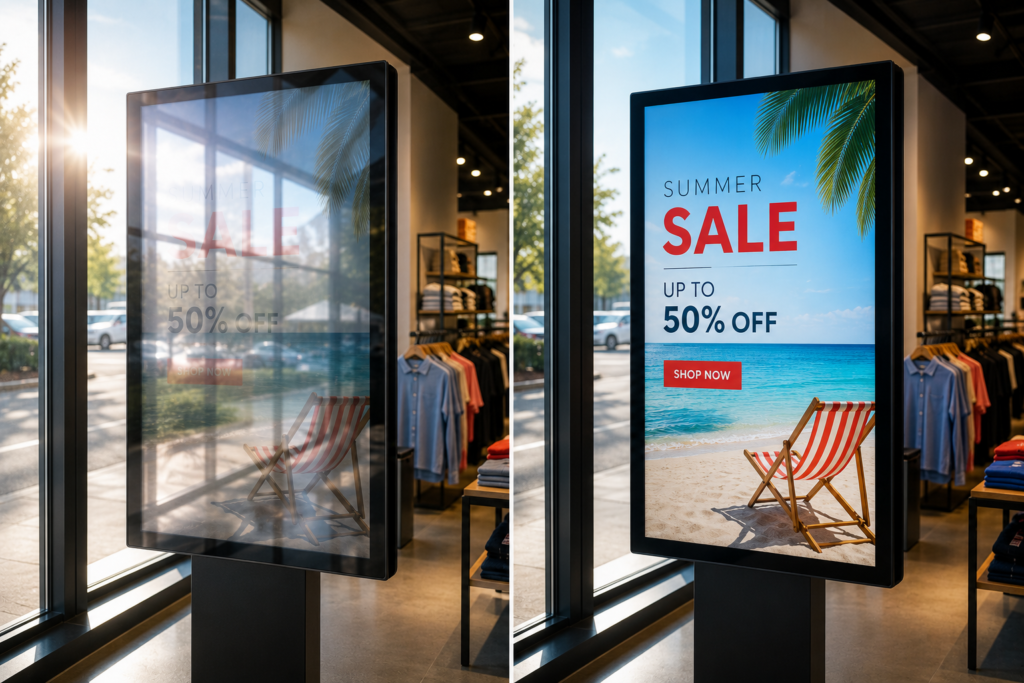
Why Brighter Screens Don’t Always Improve Visibility
When a screen becomes difficult to read, most people immediately assume the display is not bright enough.
As a result, businesses often spend thousands of dollars upgrading monitors, digital signage, kiosks, and commercial displays to higher-brightness models.
However, brightness is often not the real problem.
In many environments, glare—not brightness—is the primary reason screens become difficult to see.
Consequently, organizations frequently invest in expensive hardware upgrades only to discover that visibility issues remain.
Fortunately, anti-glare film provides a simpler and often more cost-effective solution.
The Hidden Enemy of Screen Visibility
Most display visibility issues come from reflected light.
For example, sunlight entering through windows can create powerful reflections on a display surface. Likewise, overhead lighting, skylights, glass walls, polished floors, and surrounding architecture can all contribute to glare.
As these reflections increase, they begin competing with the content being displayed.
Eventually, reflections become stronger than the image itself.
When that happens, viewers stop paying attention.
Therefore, reducing reflected light is often more effective than increasing brightness.
Why Businesses Overspend on High-Brightness Displays
Many organizations attempt to solve visibility issues by purchasing brighter screens.
While higher brightness can help in some situations, it also creates several new challenges.
Higher Equipment Costs
Commercial high-bright displays often cost substantially more than standard screens.
Increased Energy Consumption
Additionally, brighter displays require more power, which increases operating expenses.
More Heat Generation
Furthermore, displays running at higher brightness levels generate additional heat that can shorten component lifespan.
Increased Maintenance Costs
Over time, higher operating temperatures may increase maintenance requirements.
Because of these factors, display upgrades can become expensive very quickly.
What Anti-Glare Film Actually Does
Anti-glare film attacks the problem at its source.
Rather than increasing brightness, the film reduces reflections before they reach the viewer.
As a result, the displayed content becomes easier to see.
Benefits include:
- Improved readability
- Better contrast perception
- Reduced reflections
- Enhanced viewer engagement
- Improved touchscreen usability
- Better overall display performance
Most importantly, anti-glare film helps displays appear more visible without increasing power consumption.
Retail Stores Often See Immediate Results
Retail environments are especially vulnerable to glare.
For example, storefront windows introduce direct sunlight throughout the day. Meanwhile, interior lighting and polished surfaces create additional reflections.
Because of this, promotional displays often underperform despite having excellent content.
Anti-glare film helps retailers:
- Improve promotional visibility
- Enhance storefront displays
- Increase customer engagement
- Support stronger branding
- Improve overall presentation quality
As a result, businesses can get more value from their existing displays.
Touchscreens Become Easier to Use
Glare affects more than passive viewing.
It also impacts touchscreen usability.
When users cannot clearly see buttons, menus, or instructions, interactions become slower and more frustrating.
Consequently, kiosks, directories, ATMs, and interactive displays often experience reduced usability.
Anti-glare film helps improve:
- Touchscreen accuracy
- User confidence
- Navigation speed
- Accessibility
- Customer satisfaction
Therefore, glare reduction often improves both visibility and functionality.
Common Applications for Anti-Glare Film
Anti-glare film is frequently used on:
- Digital signage
- Interactive kiosks
- Retail displays
- Corporate monitors
- Airport information screens
- Hospital directories
- Museum exhibits
- University wayfinding systems
- ATM screens
- EV charging displays
Because every environment contains different lighting conditions, anti-glare film provides a flexible solution across many industries.
Why Businesses Choose SSI Anti-Glare Solutions
At Screen Solutions International, anti-glare films are engineered for commercial environments where visibility directly impacts performance.
Benefits include:
- Superior glare reduction
- Improved readability
- Better customer experiences
- Cost-effective upgrades
- Enhanced display performance
- Professional appearance
Whether improving a single display or an entire digital signage network, SSI anti-glare solutions help maximize visibility and return on investment.
Learn more:
Final Takeaway
If your display is difficult to read, brightness may not be the problem.
More often, glare is the real culprit.
Fortunately, anti-glare film helps reduce reflections, improve readability, and increase display effectiveness without the cost of replacing existing hardware.
Instead of buying a brighter screen, it may be smarter to eliminate the glare first.