How Anti-Glare Film Improves Self-Service Kiosk Visibility and User Experience
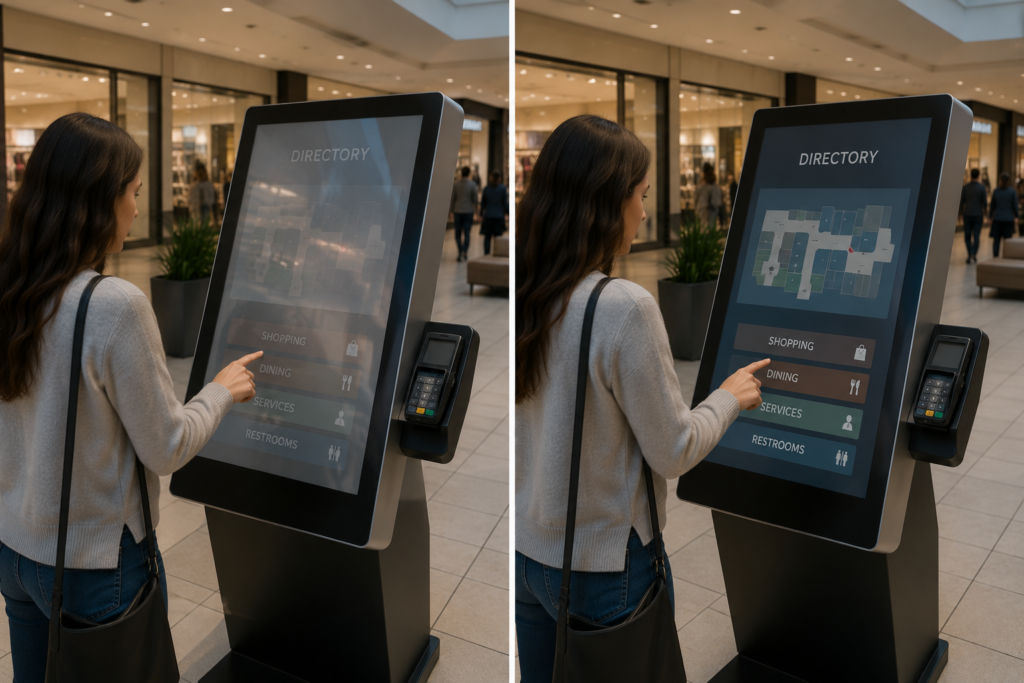
Self-Service Kiosks Are Everywhere—But Visibility Problems Remain
Self-service kiosks have become a critical part of modern customer experiences.
Today, businesses use kiosks for ordering, ticketing, wayfinding, check-in services, payments, registrations, and customer support. As a result, kiosks are now common in airports, hospitals, restaurants, hotels, retail stores, government buildings, and entertainment venues.
However, despite advances in touchscreen technology, one challenge continues to impact kiosk usability:
Screen glare.
When sunlight, overhead lighting, or surrounding reflections hit the screen, users often struggle to read information clearly. Consequently, transactions take longer, frustration increases, and customer satisfaction can suffer.
Fortunately, anti-glare film provides a simple solution that can dramatically improve kiosk visibility and overall user experience.
Why Kiosk Screen Visibility Matters
A self-service kiosk is designed to make interactions faster and more convenient.
However, if users cannot easily see the screen, the technology begins working against its intended purpose.
For example, glare can make it difficult to:
- Read instructions
- Select menu items
- Enter information
- Complete purchases
- View maps or directions
- Confirm transactions
As a result, customers may become frustrated and seek assistance from staff members, defeating the purpose of self-service technology.
Therefore, screen visibility should be considered just as important as software functionality.
Common Sources of Kiosk Glare
Kiosks operate in a wide variety of environments.
Unfortunately, many of those environments contain multiple light sources that create reflections.
Common causes of glare include:
- Large storefront windows
- Skylights
- Overhead LED lighting
- Glass walls
- Sunlight exposure
- Bright public spaces
- Reflective flooring
- Vehicle headlights
Additionally, lighting conditions often change throughout the day. Because of this, a kiosk that appears perfectly visible in the morning may become difficult to use later in the afternoon.
What Is Anti-Glare Film?
Anti-glare film is a specialized optical film that reduces reflected light on display surfaces.
Rather than simply increasing display brightness, the film works by controlling how light interacts with the screen.
As a result, users experience:
- Improved readability
- Better contrast perception
- Reduced reflections
- Easier navigation
- Enhanced viewing comfort
Furthermore, anti-glare film can often be installed directly onto existing kiosk screens or protective glass, making it a cost-effective upgrade.
Better Visibility Leads to Faster Transactions
Speed is one of the primary reasons organizations invest in self-service kiosks.
However, glare can significantly slow down interactions.
For example, users may need to reposition themselves, shade the screen with their hands, or repeatedly search for menu options hidden by reflections.
Meanwhile, customers waiting in line become frustrated as transaction times increase.
By reducing glare, anti-glare film helps users find information faster and complete tasks more efficiently.
Consequently, organizations often experience smoother customer flow and improved kiosk performance.
Improve Customer Satisfaction
Customer expectations continue to rise.
People expect digital experiences to be simple, intuitive, and convenient.
Therefore, even minor usability issues can negatively impact perceptions of a business.
Anti-glare film helps improve customer satisfaction by:
Making Information Easier to Read
Users spend less time searching for information.
Reducing Visual Fatigue
Screen content becomes more comfortable to view.
Supporting Faster Interactions
Transactions can be completed more efficiently.
Creating a More Professional Experience
The kiosk appears cleaner and easier to use.
As a result, businesses can create stronger customer experiences without replacing existing hardware.
Anti-Glare Film Is Ideal for Interactive Touchscreens
Interactive touchscreens often suffer from even greater visibility challenges.
Because users must actively engage with the screen, any reflection can interfere with navigation.
Fortunately, anti-glare film helps improve:
- Touchscreen usability
- Menu visibility
- Button recognition
- Interactive maps
- Self-ordering systems
- Digital directories
In addition, users can interact more confidently when screen content remains visible from multiple viewing angles.
Industries That Benefit Most From Anti-Glare Kiosk Film
While almost any kiosk can benefit from glare reduction, some industries see especially strong results.
Airports
Improve ticketing, check-in, and wayfinding systems.
Healthcare Facilities
Enhance patient registration and information kiosks.
Retail Stores
Improve self-checkout and customer service stations.
Hotels
Create smoother guest check-in experiences.
Restaurants
Improve self-ordering kiosk visibility.
Government Facilities
Support public information and service kiosks.
Because these locations often experience high customer traffic, even small improvements in usability can produce meaningful results.
Why Businesses Choose SSI Anti-Glare Solutions
At Screen Solutions International, anti-glare films are designed for commercial environments where display visibility directly impacts user experience.
Benefits include:
- Reduced reflections
- Improved readability
- Better touchscreen usability
- Enhanced customer satisfaction
- Cost-effective upgrades
- Professional appearance
Whether deployed on a single kiosk or across an entire network of touchscreen systems, anti-glare film helps maximize visibility and performance.
Learn more:
Final Takeaway
Self-service kiosks are designed to simplify customer interactions.
However, glare can quickly turn a convenient experience into a frustrating one.
Fortunately, anti-glare film improves screen readability, reduces reflections, supports touchscreen usability, and helps users complete transactions faster.
As self-service technology continues to expand across industries, reducing glare remains one of the simplest and most effective ways to improve kiosk performance.