 Anti-Glare Film vs. Anti-Reflective Glass: What’s the Difference?
Glare can ruin an otherwise great display installation.
A screen may be bright, sharp, expensive, and professionally installed. However, if sunlight, windows, overhead lights, or reflective surfaces create glare, the viewer may still struggle to read the content.
That problem shows up everywhere: retail storefront displays, outdoor kiosks, gas pump screens, ATMs, museum exhibits, menu boards, transportation displays, and touchscreens.
When businesses start looking for a solution, two common options come up:
Anti-glare film and anti-reflective glass.
They sound similar, but they are not the same thing.
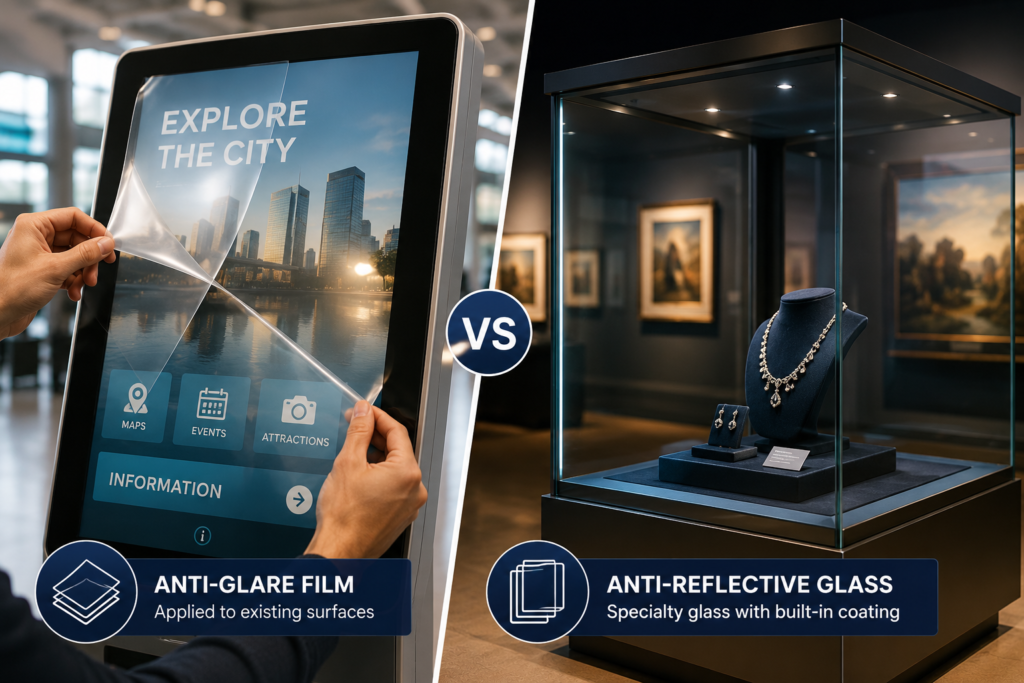
Anti-glare film is usually a retrofit solution applied to an existing glass, acrylic, touchscreen, or display-facing surface. Anti-reflective glass is usually a specialty glass product designed or treated to reduce reflections at the glass level.
Both can help reduce visibility problems. However, the best choice depends on the surface, budget, installation stage, visual expectations, and whether the display is already installed.
This guide breaks down the difference between anti-glare film and anti-reflective glass so you can choose the smarter option for your project.
What Is Anti-Glare Film?
Anti-glare film is a thin surface-applied film designed to reduce reflections on display-facing surfaces.
It can be applied to many types of clear surfaces, including:
- Display glass
- Protective glass
- Acrylic panels
- Touchscreen surfaces
- Kiosk face panels
- Gas pump screens
- ATM display windows
- Retail storefront displays
- Museum exhibit panels
- Menu board covers
- Digital signage covers
- Custom clear panels
Anti-glare film helps reduce mirror-like reflections by diffusing reflected light across the surface. As a result, harsh glare becomes softer and less distracting.
This can make the screen, object, or content behind the surface easier to see.
For many existing display installations, anti-glare film is a practical first step because it can often be added without replacing the entire screen, glass, or acrylic panel.
What Is Anti-Reflective Glass?
Anti-reflective glass is glass that has been manufactured or coated to reduce reflections.
Instead of adding a film to an existing surface, anti-reflective glass usually involves replacing or specifying a glass panel that has anti-reflective properties built into the glass system.
Anti-reflective glass is often used in premium applications such as:
- Museum display cases
- Luxury retail displays
- High-end architectural glass
- Picture framing
- Gallery installations
- Premium display covers
- Optical applications
- Specialty commercial installations
Anti-reflective glass can provide a clean visual finish, especially in controlled environments where image clarity and premium appearance are top priorities.
However, it usually requires more planning, sourcing, fabrication, and replacement work than applying film to an existing surface.
Anti-Glare Film vs. Anti-Reflective Glass: Quick Comparison
| Feature | Anti-Glare Film | Anti-Reflective Glass |
|---|---|---|
| Best For | Existing screens, acrylic panels, kiosks, displays, touchscreens | New premium glass installations |
| Installation Type | Applied to existing surface | Requires specialty glass or replacement |
| Retrofit Friendly | Yes | Usually no |
| Cost | Often more practical | Usually higher |
| Lead Time | Often faster | Can require custom glass sourcing |
| Surface Options | Glass, acrylic, touchscreens, display covers | Glass only |
| Touchscreen Use | Possible depending on surface | Possible depending on display design |
| Acrylic Use | Yes, in many cases | No |
| Best Use Case | Commercial display glare reduction | Premium optical glass clarity |
| Replacement Needed | Usually no | Usually yes |
The simplest way to think about it:
Anti-glare film improves an existing surface. Anti-reflective glass replaces or specifies the surface itself.
How Anti-Glare Film Works
Anti-glare film works by reducing sharp reflections on the viewing surface.
A glossy display, glass panel, or acrylic cover can reflect light directly back toward the viewer. That creates bright glare spots, mirror-like reflections, and washed-out content.
Anti-glare film changes how the surface handles reflected light. Rather than allowing one sharp reflection, the film helps diffuse light across the surface.
This can reduce reflections from:
- Sunlight
- Windows
- Ceiling lights
- LED fixtures
- Storefront glass
- Polished floors
- Vehicle reflections
- Museum spotlights
- Outdoor pavement
- Bright public environments
Because of that, anti-glare film is often used in environments where lighting cannot be fully controlled.
That includes outdoor displays, kiosks, gas pump screens, ATMs, menu boards, and transportation displays.
How Anti-Reflective Glass Works
Anti-reflective glass reduces reflections through coatings or glass treatments that limit how much light reflects off the glass surface.
The goal is different from standard anti-glare diffusion.
Anti-reflective glass is usually designed to preserve a very clear, premium view through the glass while reducing surface reflections. That can make it valuable for museum artifacts, high-end retail cases, framed art, and precision display environments.
However, anti-reflective glass is not always the most practical solution for existing commercial screens.
Why?
Because if the display already has glass, acrylic, a touchscreen cover, or a custom enclosure, switching to anti-reflective glass may require:
- Removing the existing panel
- Sourcing custom glass
- Reworking the frame or enclosure
- Managing new fabrication lead times
- Paying for replacement installation
- Risking downtime
- Coordinating multiple locations
For new projects, anti-reflective glass may be worth considering. For existing display glare issues, anti-glare film is often the cleaner move.
Which Option Is Better for Existing Displays?
For existing displays, anti-glare film is usually the more practical option.
That is because the screen, glass, acrylic, or cover is already installed. If the display still works and the main problem is reflection, replacing the glass may be unnecessary.
Anti-glare film can be useful for existing:
- Digital signage displays
- Kiosks
- Touchscreens
- Gas pump screens
- ATM displays
- Menu boards
- Museum panels
- Acrylic display covers
- Retail storefront screens
- Transportation displays
- Control room monitors
For existing commercial surfaces, start by asking:
Is the display failing, or is the surface reflecting light?
If the display is failing, replacement may be needed.
If the surface is reflecting light, anti-glare film may solve the more important problem without replacing the hardware.
Which Option Is Better for New Projects?
For new premium glass projects, anti-reflective glass may be worth considering.
This is especially true when:
- The glass has not been fabricated yet
- The project has a premium budget
- The surface is glass, not acrylic
- The installation requires high optical clarity
- The viewing environment is controlled
- The design calls for a high-end museum or gallery finish
However, anti-glare film can still be valuable for new projects when the final surface may be acrylic, touchscreen glass, protective glass, or a custom display cover.
For example, if you are building a new kiosk system, anti-glare film for touchscreens may still be more flexible than trying to redesign the entire face panel around specialty glass.
What About Acrylic Panels?
This is one of the biggest differences.
Anti-reflective glass is glass. Acrylic is not glass.
If your project uses acrylic, anti-reflective glass is not a direct replacement unless you completely redesign the surface material.
Acrylic is common in:
- Kiosk face panels
- Protective display covers
- Museum exhibit panels
- Retail display cases
- Menu board covers
- Custom clear panels
- Touchscreen overlays
- Outdoor display covers
For acrylic surfaces, anti-glare film for acrylic panels is usually the better route.
Acrylic can reflect strongly under bright light. It can also scratch more easily than glass. Therefore, anti-glare film may help reduce reflections while also adding a protective surface layer.
What About Touchscreens?
Touchscreens require careful review.
Anti-glare film can be used on many touchscreen applications, depending on the touch technology, surface type, and installation method.
Touchscreen applications may include:
- Self-service kiosks
- Ordering screens
- Payment terminals
- Ticketing machines
- ATMs
- Gas pump touchscreens
- Retail product selectors
- Museum interactives
- Wayfinding displays
- Control panels
Anti-reflective glass may also be used in touchscreen assemblies, but that usually needs to be planned during the display or enclosure design stage.
If the touchscreen already exists, anti-glare film may be more practical.
Before ordering film for a touchscreen, confirm:
- Is the surface touch-enabled?
- Is it glass or acrylic?
- Will users touch the film directly?
- Is it indoors or outdoors?
- Is clarity or glare reduction the top priority?
- Is the display behind protective glass?
If you are unsure, use the Request an Anti-Glare Film Quote page and send photos of the display.
Standard Anti-Glare Film vs. Ultra Clear Anti-Glare Film
When comparing anti-glare film to anti-reflective glass, it helps to know that anti-glare film is not just one option.
There are different film types for different priorities.
Standard Anti-Glare Film
Standard anti-glare film is best when the main goal is practical glare reduction.
It is a strong choice for:
- Outdoor displays
- Gas pumps
- ATMs
- Kiosks
- Menu boards
- Public-facing utility screens
- Acrylic covers
- General digital signage
Ultra Clear Anti-Glare Film
Ultra Clear Anti-Glare Film is better when the display needs to maintain a cleaner, sharper, more premium appearance.
It is a strong choice for:
- Retail storefront displays
- Museum exhibits
- Luxury showrooms
- Premium digital signage
- Corporate lobbies
- Touchscreens
- Gallery displays
- Customer-facing brand experiences
If you are considering anti-reflective glass because visual quality matters, Ultra Clear Anti-Glare Film may be worth reviewing first.
Cost and Practicality
Anti-reflective glass can be excellent, but it is usually more expensive and less flexible than film.
That is especially true when the surface already exists.
Replacing a panel may require:
- Custom glass sourcing
- Fabrication time
- Removal of existing material
- Frame compatibility review
- Reinstallation
- Downtime
- Shipping risk
- Higher labor cost
Anti-glare film may avoid many of those issues.
For single premium glass cases, anti-reflective glass may still make sense. For commercial screen fleets, kiosk rollouts, gas pumps, ATMs, menu boards, and digital signage, film is often the more realistic option.
Basically, anti-reflective glass is great when you are designing the house from scratch. Anti-glare film is what you use when the house is already built and the sun is being annoying.
Installation Differences
Anti-glare film and anti-reflective glass also differ in installation.
Anti-Glare Film Installation
Anti-glare film installation usually requires:
- Accurate measurements
- Clean surface prep
- Surface type confirmation
- Film sizing
- Dust control
- Careful application
- Touchscreen review when needed
The surface should be clean, smooth, dry, and free of old adhesive, dust, oils, fingerprints, and major scratches.
For details, review the Anti-Glare Film Installation Guide.
Anti-Reflective Glass Installation
Anti-reflective glass usually requires:
- Existing glass removal
- Custom glass ordering
- Panel sizing
- Frame compatibility
- Careful transport
- Reinstallation
- Possible downtime
- Higher handling risk
Because glass replacement is more involved, it may be better suited to new builds or premium display case projects.
Common Mistakes to Avoid
Assuming Both Products Do the Same Thing
Anti-glare film and anti-reflective glass both address reflections, but they solve the problem differently.
Replacing Glass Before Testing the Real Problem
If the issue is surface glare on an existing display, film may be a better first step.
Ignoring Acrylic
Anti-reflective glass does not solve acrylic glare unless you replace the acrylic with glass.
Forgetting Touchscreen Requirements
Touchscreens need review before film selection or glass replacement.
Choosing Only Based on Appearance
Premium clarity matters in museums and retail. However, practical glare reduction may matter more for ATMs, gas pumps, and outdoor displays.
Skipping Measurement Details
Whether you choose film or glass, accurate sizing matters.
Future Trends: Why Surface Visibility Matters More Than Ever
Commercial screens are moving into more public-facing environments every year.
More businesses are adding:
- Outdoor kiosks
- EV charger screens
- Interactive retail displays
- Digital menu boards
- Museum touchscreens
- Transportation wayfinding displays
- Smart city signage
- Control room dashboards
- Self-service payment terminals
As screens spread into bright, uncontrolled environments, glare reduction will become more important.
The future is not only about brighter displays. It is also about better surface design.
That means more projects will need to compare anti-glare film, anti-reflective glass, acrylic covers, protective panels, and touchscreen-compatible visibility solutions before installation.
So Which One Should You Choose?
Choose anti-glare film when:
- The display is already installed
- The surface is glass or acrylic
- You need a retrofit-friendly solution
- You need custom sizes
- You have multiple displays
- You are improving kiosks, ATMs, gas pumps, menu boards, or signage
- You want a more practical first step
- You need touchscreen or acrylic review
Choose anti-reflective glass when:
- The project is new
- The budget allows specialty glass
- The surface must be glass
- Premium optical clarity is the top priority
- The installation is a gallery, museum, or high-end display case
- The glass can be specified before fabrication
For most existing commercial display glare problems, anti-glare film is the faster and more flexible option.
Final Takeaway
Anti-glare film and anti-reflective glass both help address reflection problems, but they are best used in different situations.
Anti-reflective glass is often a strong option for new premium glass installations. However, anti-glare film is usually more practical for existing displays, acrylic panels, touchscreens, kiosks, ATMs, gas pumps, menu boards, and digital signage.
If the screen still works and the real issue is surface reflection, anti-glare film may be the smarter first move.
To get started, send your width, height, quantity, surface type, application details, and photos through the Request an Anti-Glare Film Quote page.
FAQ
What is the difference between anti-glare film and anti-reflective glass?
Anti-glare film is applied to an existing surface to reduce reflections. Anti-reflective glass is specialty glass designed or treated to reduce reflections at the glass level.
Is anti-glare film cheaper than anti-reflective glass?
In many retrofit projects, anti-glare film is more practical and cost-effective because it can often be applied to existing surfaces instead of replacing the glass.
Can anti-glare film be used on acrylic?
Yes. Anti-glare film can be used on many acrylic panels, including display covers, kiosk faces, menu covers, and museum exhibit panels.
Can anti-reflective glass be used instead of acrylic?
It can, but that requires replacing the acrylic with glass and confirming the frame, weight, safety, and installation requirements.
Is anti-glare film good for touchscreens?
Yes, depending on the touchscreen type and surface. Touchscreen applications should be reviewed before ordering.
Does anti-glare film make the display brighter?
No. Anti-glare film does not increase brightness. It reduces surface reflections so the screen can be easier to see.
Is Ultra Clear Anti-Glare Film better than standard film?
Ultra Clear Anti-Glare Film is better when clarity and premium appearance matter more. Standard Anti-Glare Film is better when practical glare reduction is the main priority.
Should I replace my display glass or use film?
If the glass is damaged, replacement may be needed. If the glass is simply reflecting light, anti-glare film may be the better first step.
Sources
3M screen protection products reference glare and screen scratching prevention:
https://www.3m.com/3M/en_US/privacy-screen-protectors-us/
OSHA workstation guidance recommends arranging lighting to avoid reflected glare on display screens:
https://www.osha.gov/etools/computer-workstations/workstation-environment
OSHA monitor guidance notes that monitor angle can create glare from ceiling lighting and that a glare screen may be needed:
https://www.osha.gov/etools/computer-workstations/components/monitors
3M installation and care resource for screen protection products:
https://www.3m.com/3M/en_US/privacy-screen-protectors-us/resources/installation-and-care/
Screen Solutions International:
https://ssidisplays.com/